


Japanese-last names are deeply rooted in the country’s geography, history, and social traditions. Unlike many Western surnames that evolved from occupations or patronymics, Japanese surnames often reflect natural elements such as mountains, rivers, fields, and villages. Today, Japanese last names are not only a vital part of identity in Japan but also a subject of interest for historians, linguists, writers, and people exploring Japanese culture.
This in-depth guide explores the origins, meanings, history, and modern use of Japanese-last names while highlighting their cultural significance and evolution over time.
Understanding Japanese Last_Names and Their Importance
Japanese last names, known as myōji or sei, play a central role in Japanese society. Traditionally, the family name comes before the given name, emphasizing family lineage over individuality. This structure reflects the collectivist nature of Japanese culture.
Most Japanese last-names are written using kanji characters, each carrying its own meaning. The combination of kanji gives the surname a literal interpretation that often relates to nature or location.
The Historical Origins of Japanese Last_Names
The history of Japanese last names dates back over a thousand years. However, their usage was once limited to certain social classes.
Japanese Last_Names in Ancient Japan
Before the 8th century, only nobles, aristocrats, and samurai families used surnames. These names often indicated:
- Clan affiliation
- Rank or title
- Ancestral lineage
Commoners were generally known by a single given name and their village or occupation.
How the Meiji Era Changed Japanese Last_Names
A major turning point for Japanese last-names occurred during the Meiji Restoration (1868). The government required all citizens to adopt a family name for legal and administrative purposes.
This reform led to:
- Millions of new surnames being created
- Families choosing names based on geography, landmarks, or occupations
- A massive expansion in the diversity of Japanese last_names
As a result, Japan now has over 100,000 unique surnames, one of the highest numbers in the world.
Common Themes Found in Japanese Last_Names
Japanese last_names usually follow recognizable patterns. Understanding these themes makes it easier to interpret their meanings.
Nature-Inspired Japanese Last_Names
Nature is the most common influence behind Japanese surnames. Many families named themselves after nearby landscapes.
Examples include:
- Yamada (山田) – mountain field
- Kawasaki (川崎) – river cape
- Tanaka (田中) – middle of the rice field
These names reflect Japan’s agricultural roots and close connection to the land.
Geographic Influences on Japanese Last_Names
Many Japanese last-names indicate where a family originally lived.
Common geographic elements include:
- 山 (yama) – mountain
- 川 (kawa) – river
- 田 (ta) – rice field
- 林 (hayashi) – forest
This system made it easier to identify families within local communities.
Most Common Japanese Last-Names Today
Some Japanese last names are extremely widespread and instantly recognizable.
Popular Japanese Last_Names and Meanings
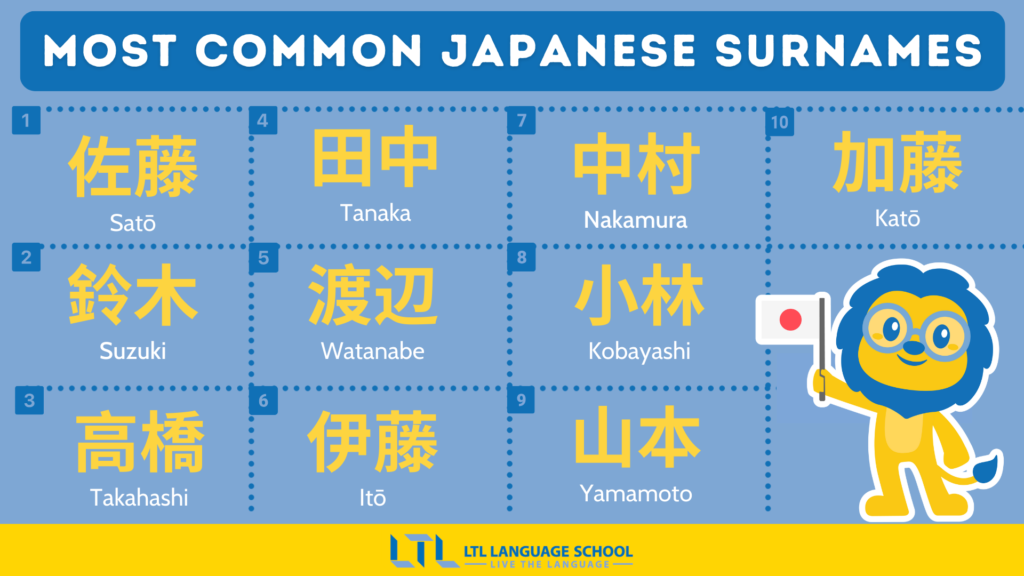
Here are some of the most common Japanese last-names:
- Sato (佐藤) – assistant wisteria
- Suzuki (鈴木) – bell tree
- Takahashi (高橋) – tall bridge
- Tanaka (田中) – central rice field
- Watanabe (渡辺) – crossing boundary
These surnames are shared by millions of people across Japan and abroad.
Regional Variations in Japanese Last_Names
Japanese last names often reveal regional origins. Different areas of Japan favor specific naming styles.
Japanese Last_Names by Region
- Okinawa: Unique surnames like Higa and Shimabukuro
- Kyoto & Kansai: Aristocratic-sounding names with historical roots
- Tohoku: Names linked to farming and mountainous terrain
These variations help historians trace population movement and settlement patterns.
Samurai Influence on Japanese Last_Names
Samurai families played a crucial role in shaping Japanese surnames. Many powerful clans passed their names down through generations.
Famous samurai-related Japanese last-names include:
- Tokugawa
- Minamoto
- Taira
Even today, these names carry prestige and historical significance.
Japanese Last_Names and Marriage Traditions
In Japan, marriage laws strongly affect family names.
How Marriage Impacts Japanese Last Names
Traditionally:
- Married couples must share the same surname
- Most women take their husband’s last name
- Some modern couples choose the wife’s surname
This practice reinforces family unity but has sparked debate about individual identity and gender equality.
Japanese Last Names Outside Japan
Japanese last names have spread globally due to migration, especially to:
- The United States
- Brazil
- Peru
- Canada
In these countries, surnames are often adapted to local languages while retaining their original kanji meanings.
Romanization of Japanese Last Names
When written in English, Japanese last names are romanized using systems like:
- Hepburn
- Kunrei-shiki
This explains spelling differences such as:
- Ohashi vs. Ōhashi
- Shimizu vs. Simizu
Romanization makes Japanese surnames accessible to a global audience.
Rare and Unique Japanese Last Names
While some Japanese last names are extremely common, others are incredibly rare.
Examples of rare surnames include:
- Tsukumo
- Ichijiku
- Kaminari
These names often originate from ancient villages or unusual landmarks.
Japanese Last Names in Anime, Manga, and Pop Culture
Japanese last names are widely used in anime, manga, and literature to convey personality, background, or symbolism.
Creators often choose surnames based on:
- Character traits
- Geographic symbolism
- Historical references
This makes surnames an essential storytelling tool in Japanese media.
How to Choose Japanese Last Names for Fiction or Branding
Many writers and business owners look for authentic Japanese last names.
Tips for Choosing Japanese Last Names
- Match the surname to the character’s region
- Understand the kanji meaning
- Avoid culturally inappropriate usage
- Ensure pronunciation simplicity
Authentic naming enhances realism and cultural respect.
Differences Between Japanese Last Names and Western Surnames
Japanese last names differ significantly from Western ones in structure and meaning.
Key differences include:
- Nature-based meanings vs. occupations
- Family name placed first
- Strong geographic influence
These distinctions reflect deeper cultural values.
Modern Trends Affecting Japanese Last Names
Modern Japan is experiencing shifts in surname traditions due to:
- Globalization
- International marriages
- Legal debates about surname flexibility
Despite these changes, Japanese last names remain a powerful symbol of heritage.
Why Japanese Last Names Matter Today
Japanese last names are more than labels—they are living records of history, geography, and culture. Each surname tells a story about ancestry, environment, and tradition.
Understanding Japanese last names helps:
- Preserve cultural identity
- Improve historical research
- Enhance storytelling and branding
Their continued relevance shows the strength of Japan’s cultural roots.
